
Parachute Environmentalism
Information Mining

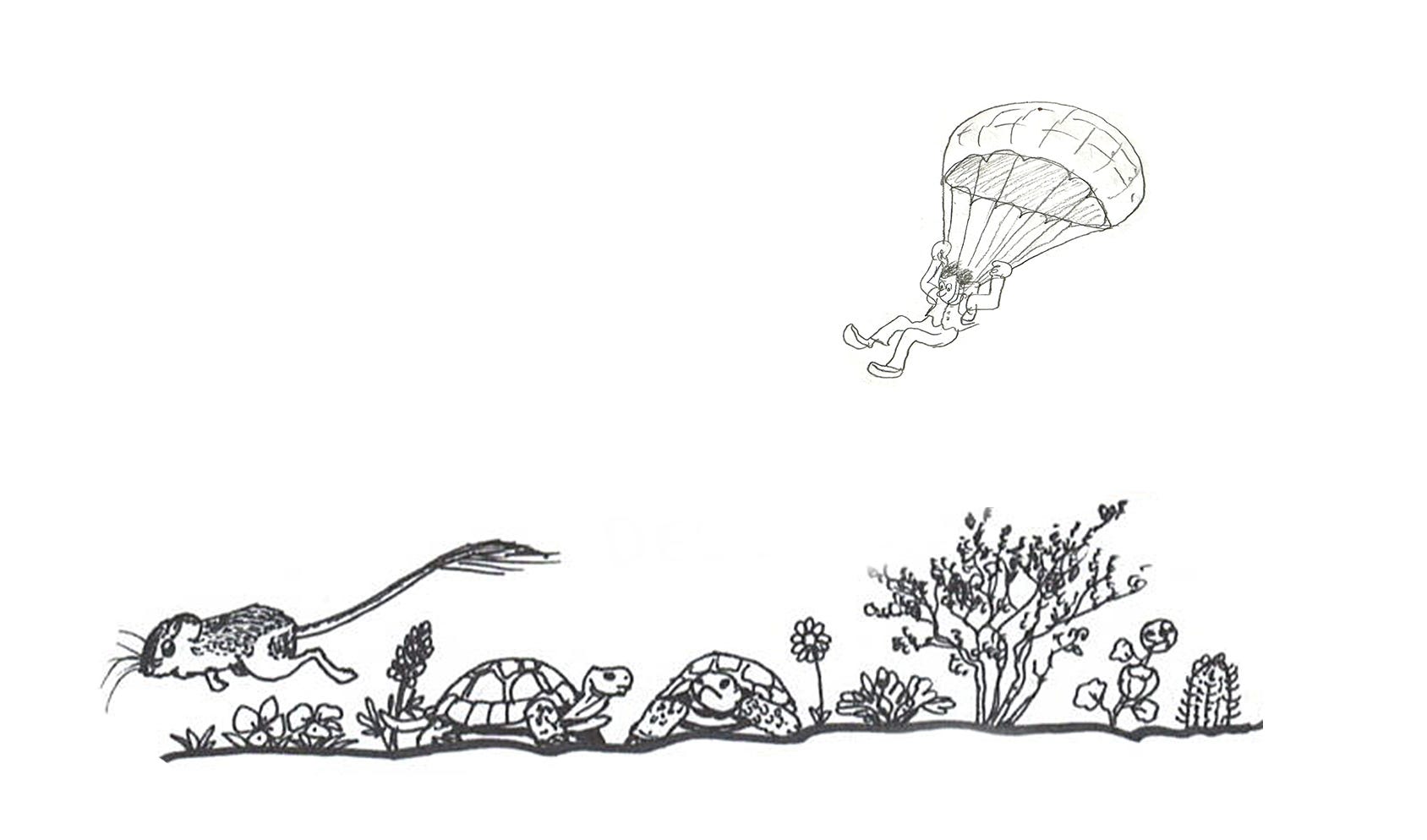
We had heard about this phrase in a vague way years ago, but recently we experienced it firsthand in the town where we live, in our own “backyard” public lands. This gave us an inkling of what Indigenous people, People of Color, and rural communities have been dealing with for many years. It remains a problem for the environmental community, despite some efforts to address it.
Parachute environmentalism is a term describing exploitative practices by often urban, distant environmentalists traveling to local communities to extract information, knowledge, pledges of support for a cause, or even simply photo ops, and then leaving without involving locals or giving credit for information or ideas collected.
Much has been written of parachute science, where researchers from wealthy Northern Hemisphere countries travel to developing host nations in the Global South which are then treated as mere locations for fieldwork and sampling, while the local experts living there are used as guides, or are ignored, and are left out of published results. There is an extractive dynamic and the practice has been labeled as colonial and parasitic.
Similarly, non-local NGOs have sometimes been accused of parachuting into regions, often benefitting from local community knowledge yet not including local voices as intellectual partners or collaborators. Information leaves with the NGOs, and the resulting environmental campaigns may not necessarily reflect or benefit the local community or direct stakeholders in their own backyard.
This is the situation we found ourselves in, and unfortunately it is not a new feeling.
As volunteers, Basin & Range Watch has always sought to share information that we find, collect, and organize, and we give it away freely and abundantly. We try to give any credit where credit is due. But very often we are the source of information, whether though our own extensive field visits to sites, long hours of research, Freedom of Information Act requests, discussions with federal and state employees about public land matters, or by attending hundreds of public meetings and reading environmental review documents. We believe that organizing such information and sharing it widely benefits us all and strengthens grassroots networks of people who are local to environmental issues, or who care deeply about public lands and want to participate. Everyone should feel empowered with tools for the use of information.
This is not a universal philosophy.
And so it was as a multinational gold mining company began to coalesce its plans for opening large pits and extracting groundwater in the headwaters of a special desert river, that we saw the NGOs parachute in from the distance.
We have lived on the headwaters of this river for 24 years, hiking the scenic public lands, birdwatching daily, learning the special flora and vegetation types of the area as naturalists, restoring habitat on our small private parcel. We came from a National Park Service and biology background, having worked careers as federal and state employees, and we chose this special area because of the wildness, the history, the dark night skies, the ability to walk out the door and observe desert bighorn sheep, endemic fish, see migrating warblers out the kitchen window, and even watch an occasional tortoise dining on wildflowers.
The Non-local NGOs brought an army of botanists to look for rare plants in order to comment on the Environmental Impact Statement for the gold mine—some of whom we had taken to show the locations of these rare plants in past years. Collaborations could have happened: we found some populations in years past, either on our own or hearing about populations from agency personnel; we told the botanists and they came out to take samples and then deciphered the genetics back in the lab. But we were not invited to help collaborate on any comment letters after all of this. (We wrote our own to agencies.) This despite the fact that we had worked with public land managers to enact on-the-ground protections of some populations of the rare plants. It was as if we lived in two parallel universes, the out-of-state botany crew from academia, and our local efforts. The collaboration suddenly ended after we guided the nonlocal experts to the plant populations.
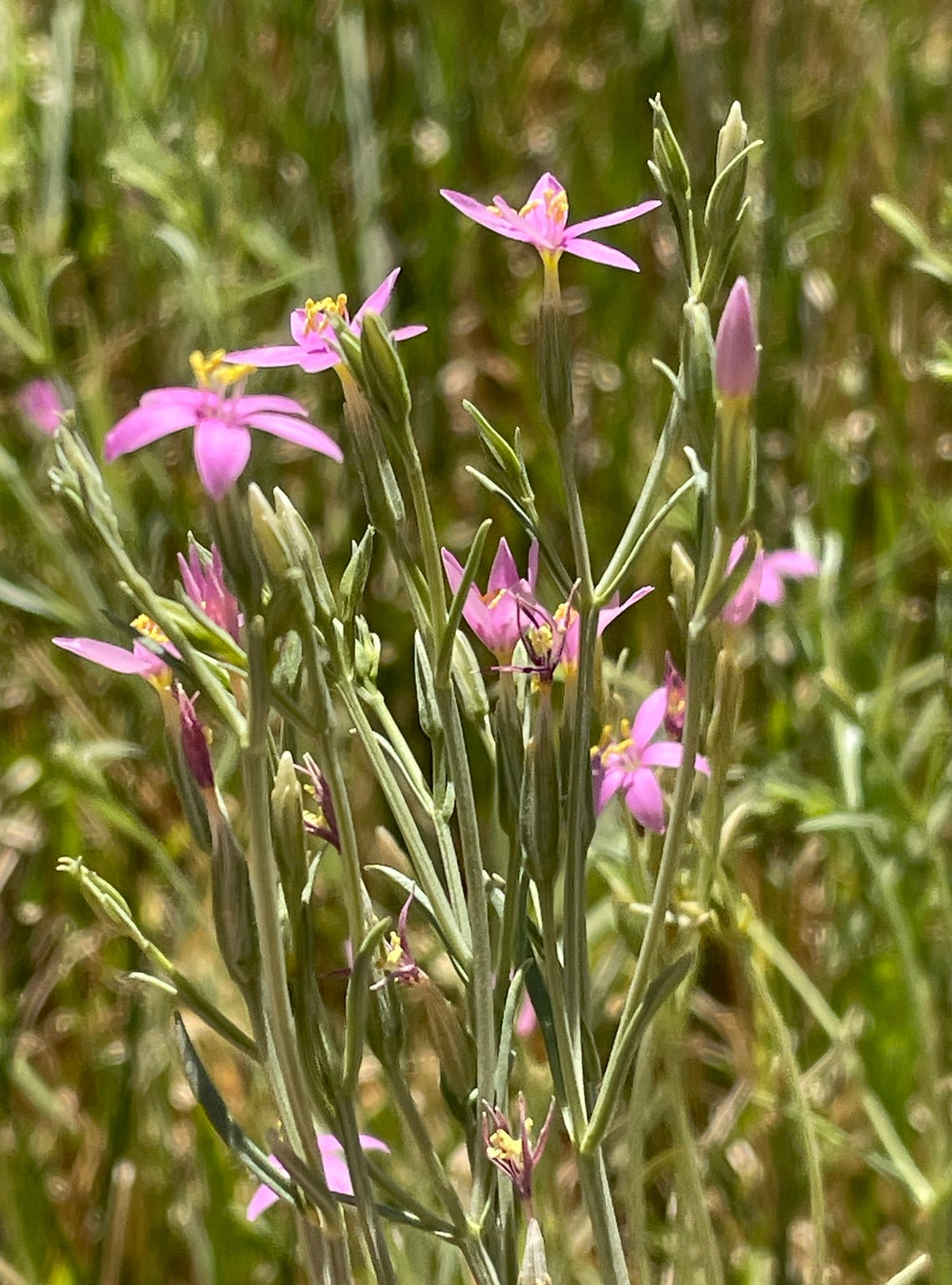
The NGOs then parachuted into the local public meeting hosted by the Bureau of Land Management and the mining company at the town community center to answer questions in front of posters and groundwater cone-of-depression maps. Several of the springs and wetlands in the area have the potential to lower or even dry up as the gold mine open pits are dug and must then be pumped and dewatered so the gold below the water table may be accessed. There is a water conservation alternative where only one of three open pits is dug into the aquifer on the headwaters of the river.
The meeting was crowded with locals, some in support of the mine, some concerned about groundwater pumping and water pollution. Tribal members were also present.
The NGOs brought a reporter from a distant city news media outlet. He walked right past us without making eye contact, even though we had taken him into the field in prior years on other stories. He also walked past the local tribal members, who had oral stories of the springs and groundwater that are not part of any AI data center information bank. In fact, the reporter chose not to interview a single local person for his story, which quickly appeared the night after the meeting. Only the parachuting NGOs and visiting out-of-state botanists were interviewed. A tight little club. The story was paywalled but a photo gallery showed smiling faces of nonlocal environmentalists touring all of our favorite spots in the valley and surrounding mountains. The private tour had taken place earlier that week.
The information mining and photo ops complete, the NGOs left back to the city or their home state.
The local all-volunteer NGO, the Tribal members, the well owners, the residents, were left with the consequences of living with future open pit cyanide leaching gold mining in the watershed, their stories untold. The slick media story that appeared slanted towards picturing a small depressed rural town at a crossroads, with the mine potentially being the one thing that could save the local economy. No mention was made of long-time residents who have been working to build an eco-toursim economy here for decades, at the gateway of a famous national park. Not a sentence about that experience from people who live here. No one was asked about their own town.
Don’t get us wrong, if the parachuting NGOs can help preserve precious groundwater, springs, and rare plants in the headwaters we are all for it.
But we still had to laugh at this whiplash tour of fellow environmentalists, scientists, and reporters in our backyard. Not even an email to grab a cup of coffee on the way out?
This colonial style of thinking—that local information, and even ideas can be treated like a resource to be extracted at will, and taken out of the locality without credit given back—is very familiar to Indigenous people. We got a taste of it.
It reflects the larger divide in the US at present, the lack of communication, lack of listening, regardless of one’s politics. This small town has traditionally been about half Democrat and half Republican so the problem is not about politics. The problem we see is that so much is missed by parachute environmentalism, so much local information and experience is ignored. Nature loses.
Speaking of the need to decolonize conservation, de Vos and Schwartz (2022) say:
“International collaborative conservation efforts need to put away the parachutes and strategically plan for building equitable scientific collaborations in support of locally driven, solutions-focused, sustainable conservation action. Conservation is a truly global problem requiring a truly global effort. Historical power imbalances perpetuated by differential access to training, funding and information hinder the progress toward the equitability required to find salient, credible, and legitimate solutions to our pressing conservation challenges. These barriers challenge us, as scientists and practitioners, to both speak up about our interests and needs but also to listen and work to build programs that are mutually equitable and beneficial to all partners as well as the biodiversity we work to protect.”
Reference:
de Vos, A., & Schwartz, M. W. 2022. Confronting parachute science in conservation. Conservation Science and Practice, 4(5), e12681. https://doi.org/10.1111/csp2.12681
Ick. So sorry to hear this, but unsurprised.
As a non- PhD scientist who worked with a lot of academics, I know exactly how you feel. I was often dismissed and treated as a data collector, even though I had more experience with the local geology